Rice koji
Translated with AI.
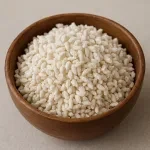
Rice koji
Rice koji is steamed rice inoculated with the mould Aspergillus oryzae. It is an essential fermentation ingredient in Japanese cooking and forms the basis for miso, sake, mirin and soy sauce.
- rice
- aspergillus oryzae (koji mould)
What is it?
Rice koji is ordinary rice that has been steamed and then inoculated with Aspergillus oryzae. During fermentation, this mould converts starch into sugars and proteins into amino acids. This process is crucial for developing umami.
Uses in the kitchen
- Base for miso, both white and red varieties
- Essential in brewing sake
- In mirin and soy sauce
- Sometimes used in marinades, such as shio-koji, to tenderise meat
Flavour profile
Neutral to slightly sweet, but mainly functional: it provides enzymes that enable fermentation.
Varieties and differences
Besides rice koji, there are barley koji (mugi koji) and soy koji, depending on the base ingredient.
What is the difference between rice koji and ordinary rice?
Ordinary rice is simply cooked or steamed, whereas rice koji is inoculated with Aspergillus oryzae, which enables fermentation.
What is rice koji used for?
For producing miso, sake, mirin, soy sauce and marinades such as shio-koji.
Can you make rice koji yourself?
Yes, but it requires knowledge and strict hygiene. Rice koji is usually bought ready-made.
Is rice koji healthy?
Yes, it contains enzymes that aid digestion and is rich in natural umami.
Where can I buy rice koji?
In specialist Japanese shops, some organic shops or online, usually frozen or dried.